About JNU
Our History and Mission
Jawaharlal Nehru University (JNU) was established in 1969 by an act of Parliament, named after India's first Prime Minister, Jawaharlal Nehru. The university was created to promote higher education and research in sciences, social sciences, and humanities, with a focus on interdisciplinary approaches and national integration.
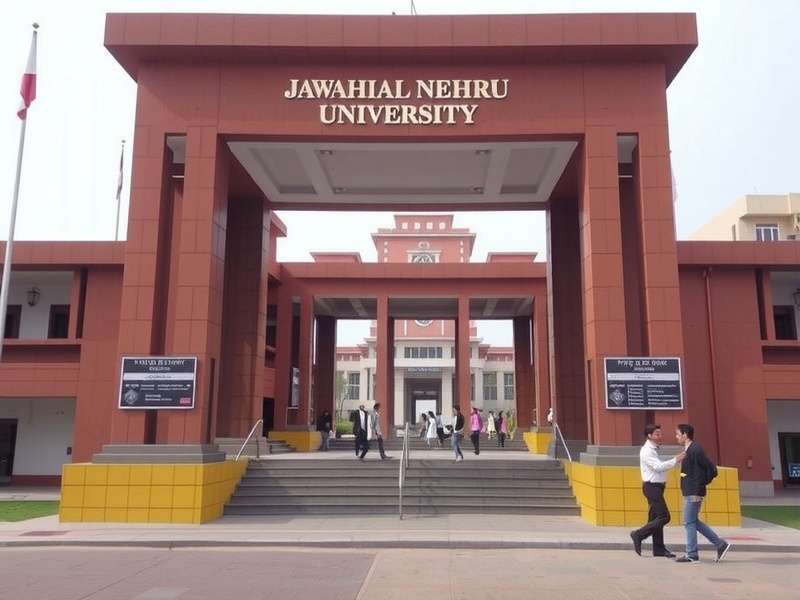
Located in New Delhi, the capital of India, JNU has grown into one of the country's most prestigious universities, renowned for its rigorous academic standards, vibrant campus culture, and commitment to social justice. The university's mission is to foster intellectual growth, critical thinking, and innovation while addressing contemporary global challenges.
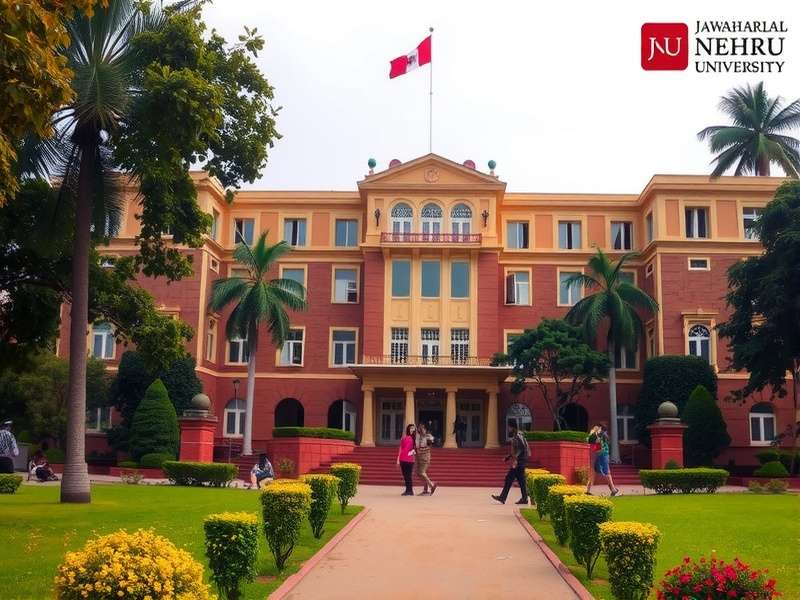
JNU's campus spans over 1000 acres of lush green land in the southern part of Delhi, providing an ideal environment for learning and research. The university community includes students and faculty from all over India and the world, creating a diverse and inclusive atmosphere.
Visit Campus
Academic Programs
JNU offers a wide range of undergraduate, postgraduate, and doctoral programs across various disciplines, designed to foster intellectual curiosity and professional excellence.
Undergraduate
Our undergraduate programs provide a strong foundation in liberal arts, sciences, and professional studies. Students engage in interdisciplinary learning, research projects, and community service.
Programs include BA (Hons) in Languages, BSc in Life Sciences, BTech in Computer Science, and integrated Master's courses. Admission is based on the JNU Entrance Examination (JNUEE) and academic merit.
The curriculum emphasizes critical thinking, communication skills, and global perspectives, preparing students for advanced studies or diverse careers.
Postgraduate
Postgraduate programs at JNU are research-intensive and specialized, offering MA, MSc, MPhil, and MBA degrees. These programs are designed to deepen expertise and foster innovation.
Popular specializations include International Relations, Environmental Sciences, Linguistics, Biotechnology, and Economics. Faculty mentorship and state-of-the-art facilities support advanced learning.
Students participate in seminars, conferences, and collaborative projects, often publishing their work in reputed journals. Many programs include internships with industry partners.
Doctoral & Research
JNU is a leading research university with robust PhD programs across disciplines. Our doctoral candidates work on cutting-edge topics, contributing to knowledge and societal progress.
Research centers focus on areas like Climate Change, South Asian Studies, Molecular Biology, and Digital Humanities. Funding is available through fellowships from UGC, CSIR, and other agencies.
The university encourages interdisciplinary research and global collaborations, with partnerships with institutions worldwide. Doctoral theses from JNU are widely recognized for their quality and impact.
Research Excellence
JNU is at the forefront of research and innovation, addressing local and global challenges through interdisciplinary collaboration and state-of-the-art facilities.
Research Centers and Institutes
The university houses numerous specialized centers, such as the Centre for the Study of Law and Governance, the School of Environmental Sciences, and the Centre for Molecular Medicine. These centers promote collaborative research and attract funding from national and international agencies.
Recent initiatives include the establishment of the AI and Data Science Lab, the Climate Resilience Hub, and the Digital Humanities Archive. These facilities provide researchers with advanced tools and resources.
JNU's research output is consistently ranked among the top in India, with high citation indices and patent filings. The university also hosts annual research symposiums and international conferences.
Innovation and Impact
JNU fosters a culture of innovation, with several startups emerging from university research. The Technology Business Incubator supports entrepreneurial ventures in biotechnology, clean energy, and IT.
Research projects have led to impactful outcomes, such as new crop varieties, water purification technologies, policy recommendations for sustainable development, and advancements in healthcare.
The university collaborates with industry partners like Tata Group, Infosys, and global organizations like UNESCO and WHO to translate research into real-world solutions.
Faculty and students regularly receive awards and recognition, including the Shanti Swarup Bhatnagar Prize, Infosys Prize, and fellowships from the Royal Society.
Campus Life
A Vibrant Community
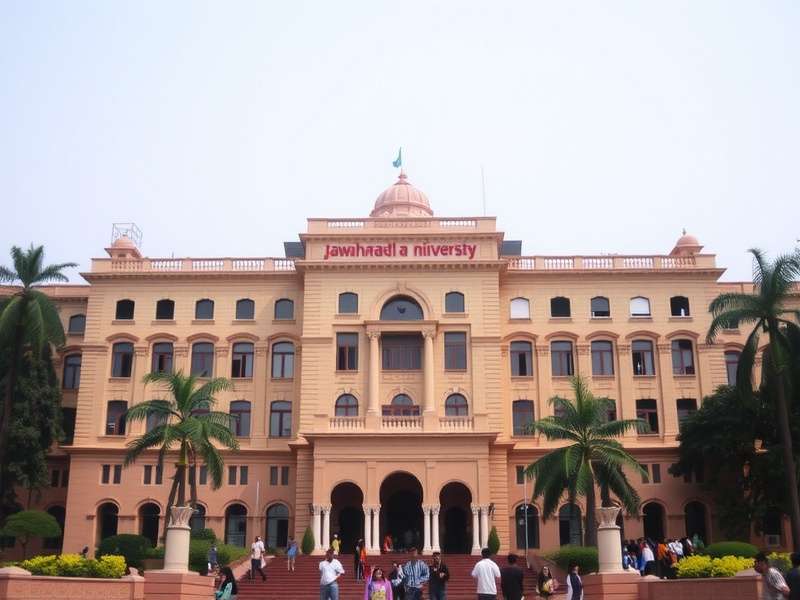
JNU's campus is known for its lively and inclusive atmosphere, where students from diverse backgrounds come together to learn, debate, and create. The university promotes a strong sense of community through various cultural, social, and recreational activities.
Residential life is integral to the JNU experience. The campus has 20 hostels (10 for men, 10 for women), each with its own dining hall, common rooms, and sports facilities. Hostels organize events and festivals throughout the year.
Student-run clubs and societies cover interests ranging from drama and music to robotics and environmental activism. The annual JNU Festival attracts participants from across the country with competitions, performances, and exhibitions.
Sports facilities include a gymnasium, swimming pool, tennis courts, football field, and indoor stadium. The university teams have won accolades in inter-university tournaments.
Health and wellness services are provided through a fully equipped health center with doctors and counselors. The campus also features libraries, cafes, and green spaces for relaxation.
Admissions
JNU welcomes applications from talented and motivated students worldwide. The admission process is competitive and based on merit, entrance examinations, and interviews.
Admission Process
Admissions for most programs are conducted through the JNU Entrance Examination (JNUEE), held annually in May. The exam tests subject knowledge, analytical skills, and language proficiency.
For international students, applications are accepted based on equivalent qualifications and English language test scores (IELTS/TOEFL). Some programs may require additional tests or portfolios.
Key dates: Application window opens in January, JNUEE in May, results by June, and semester begins in July. Some programs like PhD have rolling admissions based on research proposals.
Financial aid is available through scholarships, fellowships, and assistantships. The university offers need-based fee waivers and travel grants for deserving students.
Download ProspectusRequirements & Support
Undergraduate applicants must have completed 12 years of schooling with a minimum of 75% marks. Postgraduate applicants need a relevant bachelor's degree with at least 55% aggregate.
Documents required include academic transcripts, identity proof, passport-sized photographs, and a statement of purpose. International students must submit visa and health insurance details.
The International Students Office provides support for visa applications, accommodation, and cultural integration. Orientation programs are conducted at the start of each semester.
Prospective students can attend open days or virtual tours to learn more. Contact the admissions office at [email protected] or call +91-11-26704000 for queries.
Contact AdmissionsApplication Deadlines
Undergraduate: March 31
Postgraduate: April 15
Doctoral: Rolling
Fee Structure
Annual fees range from ₹15,000 to ₹50,000 for domestic students. International student fees vary by program.
Scholarships
Merit-based and need-based scholarships available. Top performers receive full tuition waivers.
News & Events

International Conference on Climate Change
JNU hosted a three-day conference with experts from 30 countries discussing sustainable solutions. The event featured keynote speeches, panel discussions, and poster presentations.
Date: October 15-17, 2023 | Venue: JNU Convention Center
Read More
JNU Students Win National Debate Championship
The university debate team secured first place in the All India Inter-University Competition, showcasing exceptional oratory skills and critical analysis on global topics.
Date: November 5, 2023 | Category: Student Achievements
Read More
New Advanced Biotechnology Lab Inaugurated
A state-of-the-art laboratory for genomic research was opened, funded by a grant from the Department of Biotechnology. It will support cutting-edge projects in health and agriculture.
Date: December 10, 2023 | Venue: School of Life Sciences
Read MoreContact Us
We are here to assist you. Reach out for inquiries about admissions, programs, collaborations, or general information.
Phone & Email
Admissions: +91-11-26704000
Administration: +91-11-26704100
General: [email protected]
International: [email protected]
Office Hours
Monday to Friday: 9:00 AM - 5:30 PM
Saturday: 10:00 AM - 2:00 PM
Sunday: Closed
Holidays: As per university calendar
Send a Message
Partner Institutions
JNU collaborates with leading organizations worldwide to enhance academic and research opportunities.